
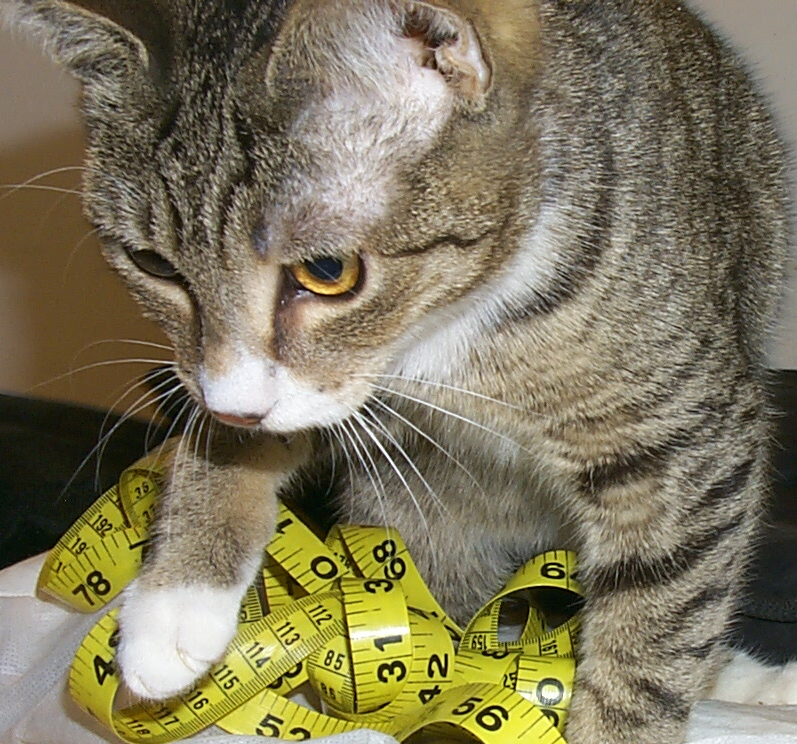
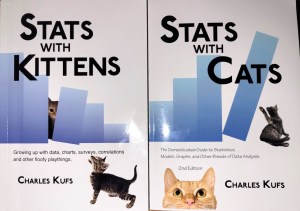
The second edition of my book, Stats with Cats: The Domesticated Guide to Statistics, Models, Graphs, and Other Breeds of Data Analysis, is now available on Amazon, IngramSpark, and in bookstores
Stats with Cats is aimed at readers who have taken an introductory course in statistics, call them Stats 101, and want to conduct their own analyses either at work or in their personal lives. The book is about applied statistics, from designing datasets and deciding what analyses to conduct, to writing the final report, which are often neglected in Stats 101.
Stats with Cats consists of 31 Chapters in 7 Parts.
Part I reviews the jargon and concepts you heard in Stats 101. It explains the basic jargon of statistics, including data, samples, and variables; the variety of measurement scales that can be used to characterize phenomena; variance and why it is such a fundamental concept in statistics; what models are and how statistics uses models to create models; the fundamental assumptions inherent in statistical inference and what happens when the assumptions are violated; and the five broad goals a statistical analysis may have.
Part II is about the skills, tools, materials, plans, and resources you’ll need to conduct your own analyses. Included are descriptions of how organizations can rely on good data analysis to make decisions; how to decide if you should do an analysis yourself or get someone to do it for you; how to set up a data analysis project so that it gets done right the first time; what software and information sources you’ll need; and what problems you may encounter.
Part III will show you how to create your own datasets for analysis, including deciding: what variables to measure and how to measure them; how to select samples; types of data that may be suited for statistical analysis; how to recognize and control sources of variability; and how to put samples and variables into a format that statistical software can analyze.
Part IV is about how to preprocess data so it is ready for analysis. Included are descriptions of: kinds of errors that occur in real-world datasets and how to find and correct them; and ways you can augment your dataset to make your analysis more thorough.
Part V connects the practical framework of applied statistics to the academic content of Stats 101. It includes descriptions of procedures and hints for what to calculate, what to plot, and what to look for when you first explore your data; how to present information in simple windows; and how you can analyze text.
Part VI explores advanced data analyses that are used to build and evaluate models. Included are discussions of: the process of creating a statistical model; advanced statistical analysis techniques you didn’t hear about in Stats 101; and why even the most credible models can fail and what you might do about it.
Part VII is about aspects of practical data analysis, applied statistics, that aren’t usually mentioned in Stats 101. Examples include: how to write data analysis reports; how to comment on someone else’s statistical analysis even if you don’t know a lot about statistics; and suggestions for how you can practice the things you’ve learned.
Stats with Cats contains 56 figures, 43 tables, and over 500 images of cats in 568 pages. There’s also a 444-word Glossary at the end so that you can look up any unfamiliar jargon you might encounter. Stats with Cats has a Flesch-Kincaid Grade Level readability of about 10.2 (9.9 to 11.7), so it is suitable for both young adult and mature readers.
In the second edition, I deleted esoteric cultural references that didn’t age well, internet links that went dead, and screen-captures of high-end statistical software that few people have access to. I added chapters on data-driven organizations, graphical windows for presenting data, how to analyze text, and how to write statistical reports. I’ve also added more pictures of cats.
And the cats? They provide emotional support for people who experience math anxiety. When the statistics become too intense, there’ll be a picture of a cat nearby to restore calm. They are your domesticated guides to statistics, models, graphs, and other breeds of data analysis. Come for the cats; stay for the stats.
So, whether you’re a business person or other professional who has to conduct some statistical analyses, or supervise someone else who is conducting a statistical analysis, or review a statistical analysis done by someone else, this is a book you’ll need to read. And if you just want to use some statistics to manage and explore your personal life, this is a book you’ll want to read.

Order Stats with Cats: The Domesticated Guide to Statistics, Models, Graphs, and Other Breeds of Data Analysis (2nd edition) as a paperback or hardcover. Read them to your cats. Discover more about using statistics at my Stats with Cats blog and other thought-provoking observations at my Random Terrabytes blog. Join other fans at my Instagram and LinkedIn pages.




 Stats With Cats Blog